
TL;DR: On May 24, 1976, a blind tasting in Paris ranked a California Chardonnay above France’s finest white Burgundies. The winning wine, the 1973 Chateau Montelena Chardonnay, was made by Miljenko “Mike” Grgich — my father’s uncle. One year later he founded Grgich Hills Estate here in Rutherford, where our family still makes wine with that same crisp, food-friendly philosophy today.
Fast Facts
- The event: The Judgment of Paris — officially the Paris Tasting — a blind tasting held in Paris on May 24, 1976.
- The winning white wine: the 1973 Chateau Montelena Chardonnay, from Napa Valley.
- The winemaker: Miljenko “Mike” Grgich, our family’s founder.
- Our estate: Mike founded Grgich Hills Estate in Rutherford in 1977, one year after the tasting.
- Visit us: seated and reserve tastings in Rutherford, plus our annual harvest grape stomp.
What this guide covers: what the 1976 Judgment of Paris was, which wine won and who made it, how our estate carries that legacy forward, and how you can experience it in Rutherford today.
By Luke Jeramaz, Digital Marketing Manager · Published 7/21/2026
I grew up around this estate, so the 1976 Judgment of Paris has never felt like distant history to me — it is family history. In a blind tasting judged entirely by French experts, California wines outscored celebrated bottles from Bordeaux and Burgundy, and the man who made the winning white wine, Mike Grgich, went on to build the winery my father makes wine at today. Let me tell you what happened, why it still matters, and how you can experience that lineage when you visit us in Rutherford.
What exactly was the Judgment of Paris?
The Judgment of Paris was a blind comparative tasting held in Paris on May 24, 1976. It was organized by British wine merchant Steven Spurrier and Patricia Gallagher to compare top California wines against benchmark French bottles.
The event’s official name was the Paris Tasting, though the world now knows it as the Judgment of Paris — the name given to the moment French judges awarded California wines their highest scores.
The panel of nine judges was made up of respected French wine authorities. They tasted without knowing which wines were French and which were Californian. In both the white and red flights, California wines placed first — an outcome few in the room expected.
George M. Taber of TIME magazine was the only journalist present. His reporting turned a small trade event into a global headline that reshaped the wine world.
Which wine won, and who made it?
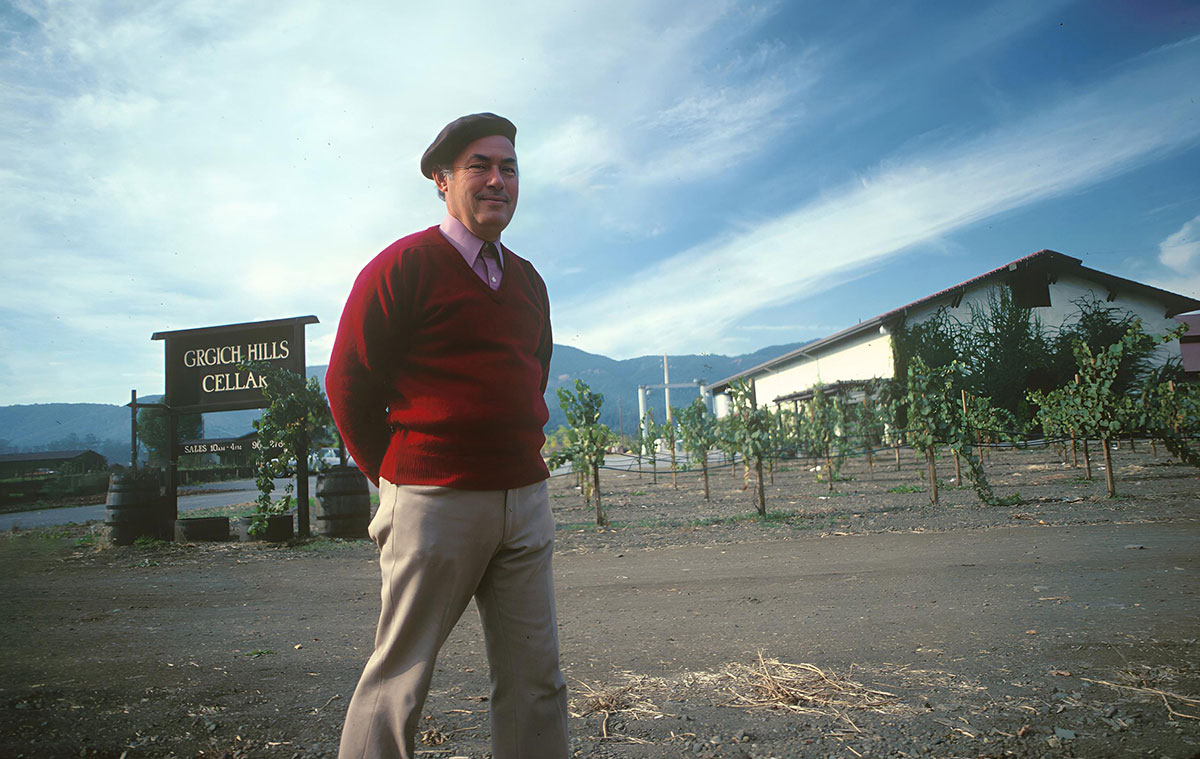
The white-wine flight was won by the 1973 Chateau Montelena Chardonnay, a Napa Valley wine. Its winemaker was Miljenko “Mike” Grgich — my father’s uncle, and, like my father, a Croatian immigrant who built a life in Napa Valley.
The red-wine flight was won by the 1973 Stag’s Leap Wine Cellars Cabernet Sauvignon, also from Napa Valley. Together, the two results made one point undeniable: Napa Valley could stand among the greatest wine regions on earth.
How does our estate carry the Judgment of Paris forward?
The connection is personal. Mike Grgich made the 1973 Chateau Montelena Chardonnay that won the white flight at the Paris Tasting. In 1977, one year after the tasting, he partnered with Austin Hills to establish Grgich Hills Estate here in Rutherford.
I want to be honest with you: the exact bottle that won in 1976 was made at Chateau Montelena, before our estate existed. What you can experience with us is the same philosophy in the same family’s hands — classically structured, terroir-driven wines built for the table, not for spectacle.
How did one tasting change Napa Valley?
Before 1976, fine wine was assumed to be French by default. The Judgment of Paris broke that assumption in a single afternoon and gave Napa Valley lasting credibility on the world stage.
That legacy is now part of the permanent record. A bottle of the 1973 Chateau Montelena Chardonnay is held in the collection of the Smithsonian’s National Museum of American History as an artifact of American cultural history.
What the result set in motion
- Global credibility: Napa Valley entered the conversation alongside Bordeaux and Burgundy.
- Investment and ambition: a generation of growers committed to estate-grown quality.
- Our beginning: Mike Grgich founded Grgich Hills Estate in Rutherford in 1977.
- An enduring style: crisp, balanced, food-friendly wine became our signature.
What makes our Chardonnay style distinctive?
We build our Chardonnay for freshness and food, not for heavy oak or butter. We make it without malolactic fermentation, which preserves the wine’s bright natural acidity and gives it a crisp, mineral-driven profile.
That choice is a direct line back to the philosophy that won in Paris: balance over power, and structure that rewards both the cellar and the table.
How does the 1976 tasting compare to our estate today?
| 1973 Chateau Montelena Chardonnay | Grgich Hills Estate today | |
|---|---|---|
| Winemaker lineage | Made by Mike Grgich | Founded by Mike Grgich in 1977; family-led today |
| Where to taste it | Historic bottle; one example in the Smithsonian | Visitor tastings in Rutherford, Napa Valley; available for purchase in all 50 states and over 40 countries |
| Winemaking philosophy | Crisp, balanced, classically structured | Same philosophy; no malolactic fermentation |
| Farming | Conventional era of the 1970s | Estate-grown, Regenerative Organic Certified farming |
| What it represents | The wine that proved Napa belonged alongside the best wine-producing regions of France | The living continuation of that legacy |
Can you visit the winery established by the winemaker who won the Judgment of Paris?
Yes — please do. We are open to visitors in Rutherford, on the Napa Valley floor along Highway 29. You can book seated and reserve tastings, and during harvest we host our annual grape stomp.
We are family-owned and intentionally traditional. We are not a luxury spectacle of castles and caves — we are the working home of a winemaking legacy, estate-grown, adhering to Regenerative Organic Certified farming.
“Every wine tells the story of where it comes from and the hands that made it. In 1976, that story changed how the world saw Napa Valley — and we are still living it, one estate-grown vintage at a time.”
— Ivo Jeramaz, VP of Vineyards and Production & Head Winemaker, Grgich Hills Estate

Frequently Asked Questions
What was the Judgment of Paris in 1976?
It was a blind wine tasting held in Paris on May 24, 1976, also known officially as the Paris Tasting, in which a French expert panel ranked California wines above prestigious French bottles in both the white and red flights, establishing Napa Valley’s global reputation.
Which wine won the white category at the Judgment of Paris?
The 1973 Chateau Montelena Chardonnay from Napa Valley won the white-wine flight. Winemaker Miljenko “Mike” Grgich made it, and he founded Grgich Hills Estate the following year.
Is Grgich Hills the winery that won the Judgment of Paris?
Not exactly. Mike Grgich made the winning Chardonnay at Chateau Montelena. One year later, in 1977, he founded Grgich Hills Estate in Rutherford, where our family continues his winemaking philosophy today.
Can I visit Grgich Hills Estate?
Yes. We welcome visitors in Rutherford,, Napa Valley, with seated and reserve tastings and a harvest-season grape stomp. We can frequently accommodate walk-ins and reservations are recommended.
What style of Chardonnay does Grgich Hills make?
A crisp, balanced, food-friendly style. We make our Chardonnay without malolactic fermentation, preserving bright acidity and a mineral-driven profile rather than a heavy, buttery character.
Come taste a piece of wine history
The Judgment of Paris proved Napa Valley belonged among the world’s great wine regions. At our estate, that history is not behind glass — it is poured. Reserve a seated tasting in Rutherford to taste the lineage for yourself, or read more about our founder, Mike Grgich.
About the author
Luke Jeramaz is Digital Marketing Manager at Grgich Hills Estate in Napa and the son of winemaker Ivo Jeramaz.